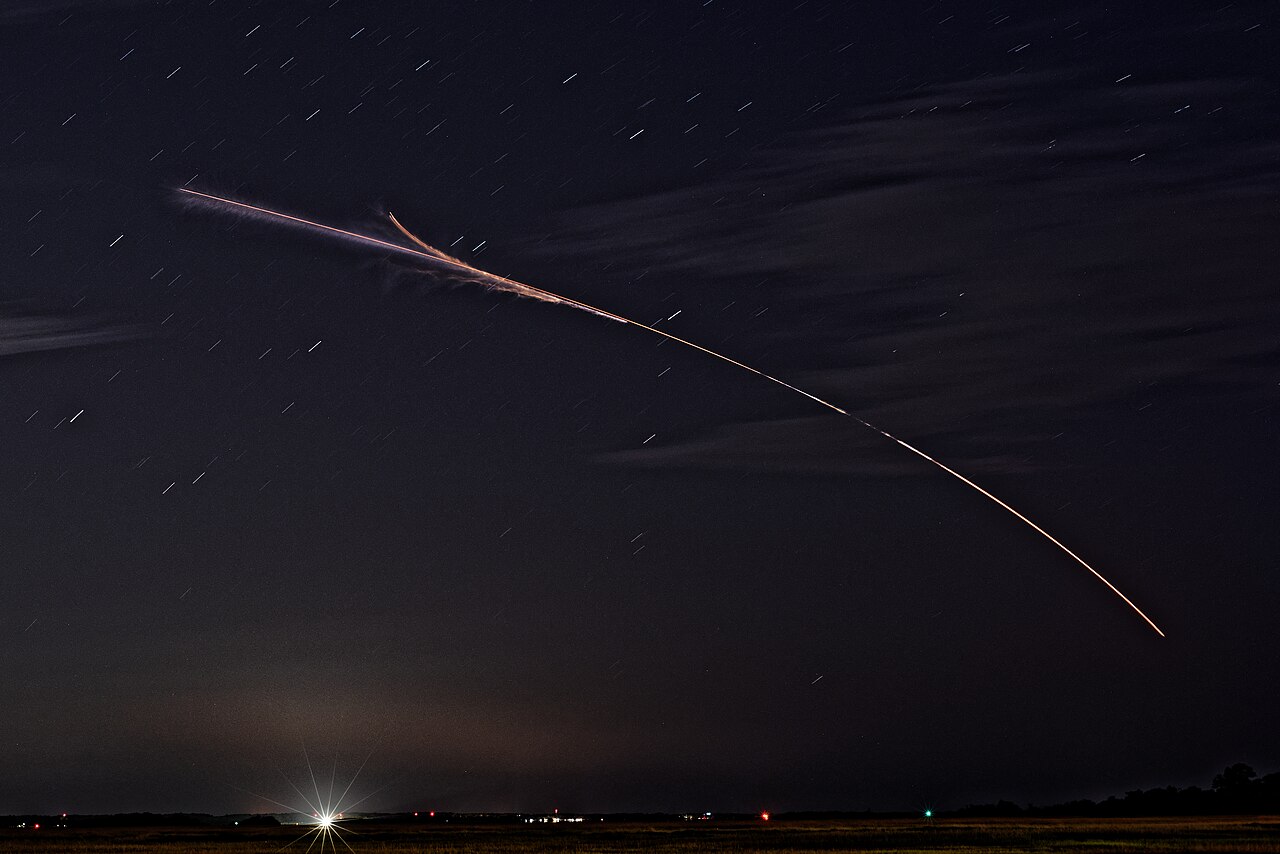
A SpaceX Falcon Heavy lifted off from Kennedy Space Center early Tuesday with 24 satellites aboard. The flight, part of the Department of Defense’s Space Test Program, also put several NASA technology demonstrations on their way to orbit.
Sharing a launch makes it possible to fly experiments that do not need a rocket of their own. It also makes the flight more complicated. Different spacecraft can need different orbits, so delivering all of them takes carefully timed engine burns and deployments.
One NASA experiment will test a spacecraft propellant intended to be easier to handle than conventional hydrazine. A separate demonstration will test a compact atomic clock for use in space. The rocket is the visible part of the mission. The smaller payloads will now have to show whether their ideas work away from Earth.
Reporting source. Cover photograph: Jud McCranie · Image license.